Removing Years of Algae Without Damaging Shingles
Roof Cleaning in Fayetteville for homes with black streaks, moss, and organic growth darkening roofing materials
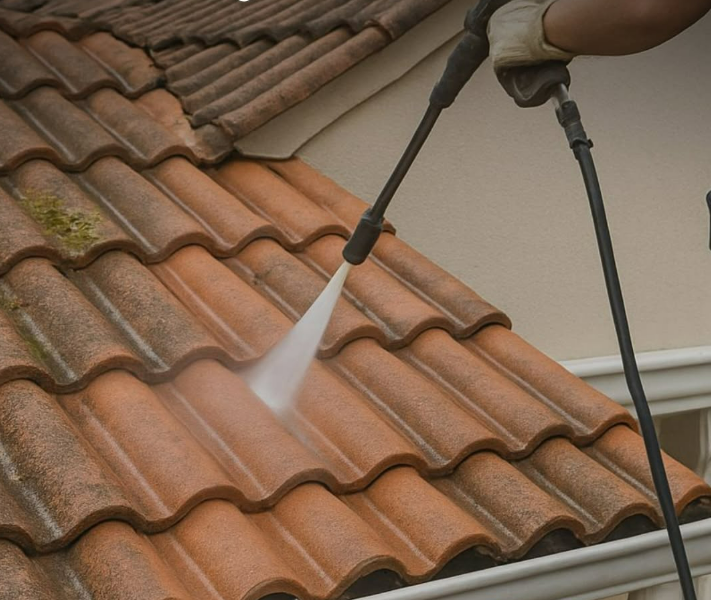
Black streaks that run down asphalt shingles aren't just cosmetic—they're colonies of algae feeding on the limestone filler used in roofing materials, spreading across your roof and making the entire structure look decades older than it actually is. Fayetteville's warm, humid climate creates ideal conditions for this growth, with moisture lingering on shaded roof sections and algae spores traveling from neighboring properties to colonize new surfaces. Rudy's Pressure Washing uses soft washing methods tailored to roof material and condition, killing organic growth without the high pressure that can lift shingle edges, damage granules, or force water under protective layers.
Roof cleaning treats the algae, moss, and lichen at their root systems rather than simply washing away visible discoloration, which stops regrowth and restores the roof's original appearance. The method adjusts based on whether you have asphalt composition shingles, architectural shingles, or other roofing types, using chemical treatment and low-pressure rinsing to remove buildup without compromising the material underneath.
Schedule an inspection to assess your roof's current condition and determine the appropriate cleaning approach.
Why Algae Growth Accelerates on Fayetteville Roofs
The algae responsible for roof staining thrives in humidity and spreads through airborne spores that land on damp surfaces, establishing colonies that darken and expand over time. North-facing roof slopes and sections shaded by trees stay wet longer after rain, giving algae the moisture it needs to colonize aggressively. Moss follows in areas where moisture persists, developing root structures that work between shingles and can eventually lift or separate roofing materials if left unchecked.
After cleaning, the black streaks disappear and your roof returns to its manufactured color, often appearing years newer and significantly improving curb appeal. The treated surface stays cleaner longer because the cleaning solution eliminates living organisms rather than just removing visible staining, which means you're not simply washing away symptoms while the underlying growth continues to spread.
Timing matters with roof maintenance—catching algae and moss early prevents the heavy colonization that becomes harder to treat and the potential damage that develops when organic growth embeds deeply into roofing materials. The service includes attention to roof valleys, edges, and areas near dormers where moisture collects and growth concentrates first.
Common Questions About This Service
Homeowners often want to understand how roof cleaning works and whether it's safe for their specific roofing materials before scheduling service.
What causes the black streaks on my roof?
The dark discoloration comes from Gloeocapsa magma, an algae species that feeds on the limestone filler in asphalt shingles and spreads across roofing materials in humid climates like Fayetteville's.
How does soft washing protect my shingles better than pressure washing?
Soft washing uses chemical treatment and low pressure to kill algae without the mechanical force that can strip protective granules, lift shingle tabs, or drive water underneath roofing materials where it can cause leaks and deterioration.
Will cleaning my roof make it last longer?
Removing algae and moss prevents these organisms from continuing to feed on roofing materials and holds moisture against the surface, though cleaning primarily restores appearance rather than directly extending the roof's structural lifespan.
How long does it take for a cleaned roof to show full results?
Most discoloration disappears immediately after treatment and rinsing, though some deeply embedded staining may continue to fade over the following weeks as dead algae fully breaks down and washes away during rain.
Why do some roofs in my neighborhood have streaks while others stay clean?
Differences in sun exposure, tree coverage, roof slope, and surrounding vegetation all affect how quickly algae colonizes, with shaded, north-facing roofs in humid areas like Fayetteville showing streaking faster than roofs with full sun exposure and good airflow.
Rudy's Pressure Washing selects cleaning methods based on your specific roofing material and the severity of organic growth present. Schedule your roof cleaning before buildup becomes severe and more difficult to treat effectively.